Messing with Meshtastic!
Introduction to Meshtastic
Because ACARS and ADS-B wasn't enough tinkering with electromagnetic emissions, I've gotten into Meshtastic. That link should cover the basics but for a TL;DR, Meshtastic is a standard that uses unlicensed frequencies (915MHz in the USA, 868MHz in Europe, and others) to send small packets of digital data in a decentralized wireless mesh. This is useful in emergency situations as well as to have resilient backup communications networks, sort of like FMRS and HAM radio operators but digital and encrypted by default. It aims for longer range and reliability over high bitrates so the default setting is about 1 Kbps (or .125 KB/s) and the fastest it can go is about 30 Kbps (or 3.75KB/s). Even with these limitations, it has a lot of value and definitely a lot of cool factor.
What have I been messing with?
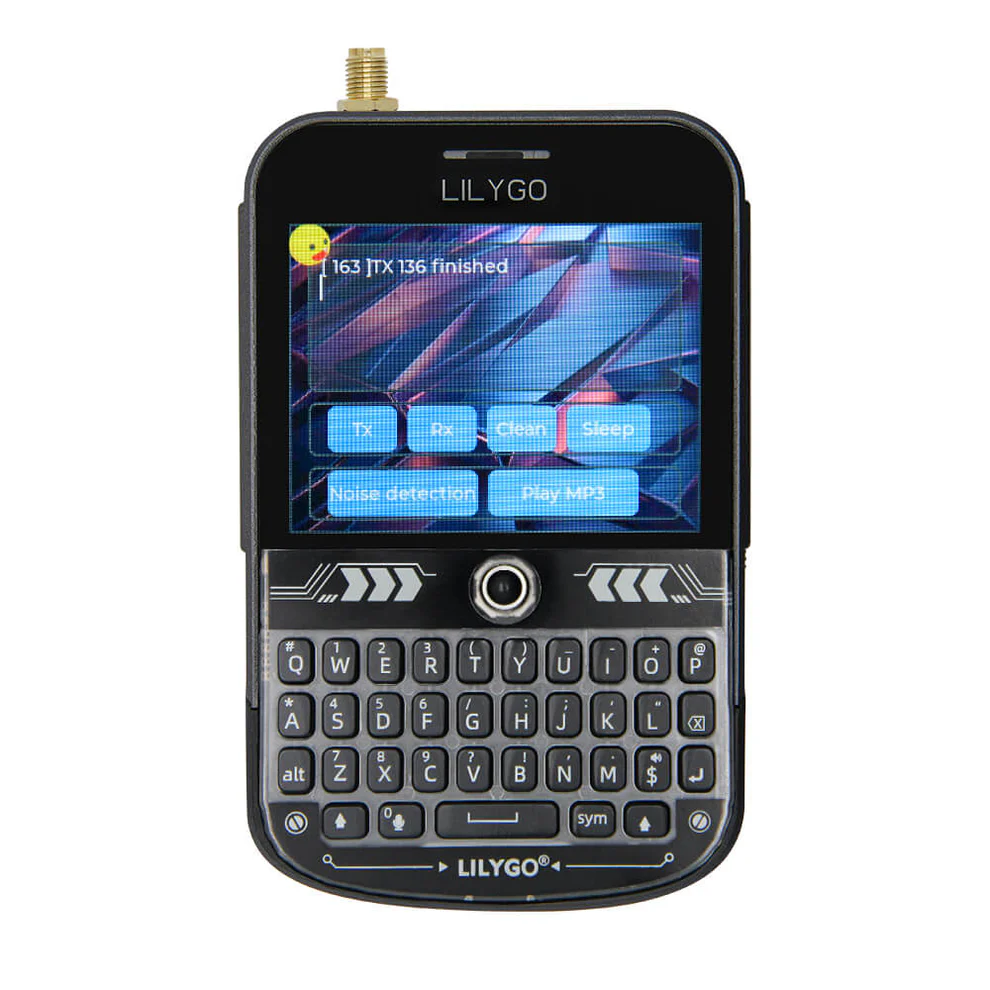
T-DECK-PLUS_1 My first Meshtastic device is a LILYGO T-Deck Plus. It looks like a BlackBerry with a full keyboard, full-color screen, battery and an external SMA antenna port. I picked this one because after doing a little bit of research, I expected I'd get at least one more node for a stationary installation, so this would be one for "on the go". It's a great device, clearly polished quite a bit especially compared to other products. Meshtastic is still very much dominated by DIY, hacker types that would just as easily 3D print a case for their specific needs than go out and buy a case. I like the T-Deck a lot for its all-in-one form factor and the ability to see maps on the device itself so no smartphone is required. It is "Bring Your Own Maps" though, so I followed a community guide to get detailed map tiles where I'd likely be.
I also got a Seeed T-1000E, which is a hugely popular node and for good reason. It's the size of a card but thicker and it has a button, a buzzer, an LED and charge points with a magnetic cable. You can connect to it from your phone and it provides full features, at least those possible without an onboard screen. It's a real handy device to carry consistently, like the T-Deck but even more portable.
I also also have a LILYGO T3 S3 V1.3 coming, which is an inexpensive board without a battery and it has a simple screen. I plan on turning that into the stationary node so my T-Deck and T-1000E can be mobile. A cool effect of this setup is while at home, I'll be able to benefit from the better reception since the mesh repeats messages but I won't need to plug into anything.
What's it like?
It's like making contacts as a HAM but they're automatic and come with cool information like position. So far I've received a few human messages but no full conversations, and that's okay. People with Meshastic devices will be switching them on in emergencies and talking a lot. The community is also great, I joined the Meshtastic Discord and they've helped a lot. Like I mentioned, it's also a pretty technical crowd at this point but the polish on these devices and the software make me think this will go more mainstream very soon.
What does your setup look like?
My Seeed T-1000E just hangs out in my pocket all day, connected by Bluetooth to my phone.
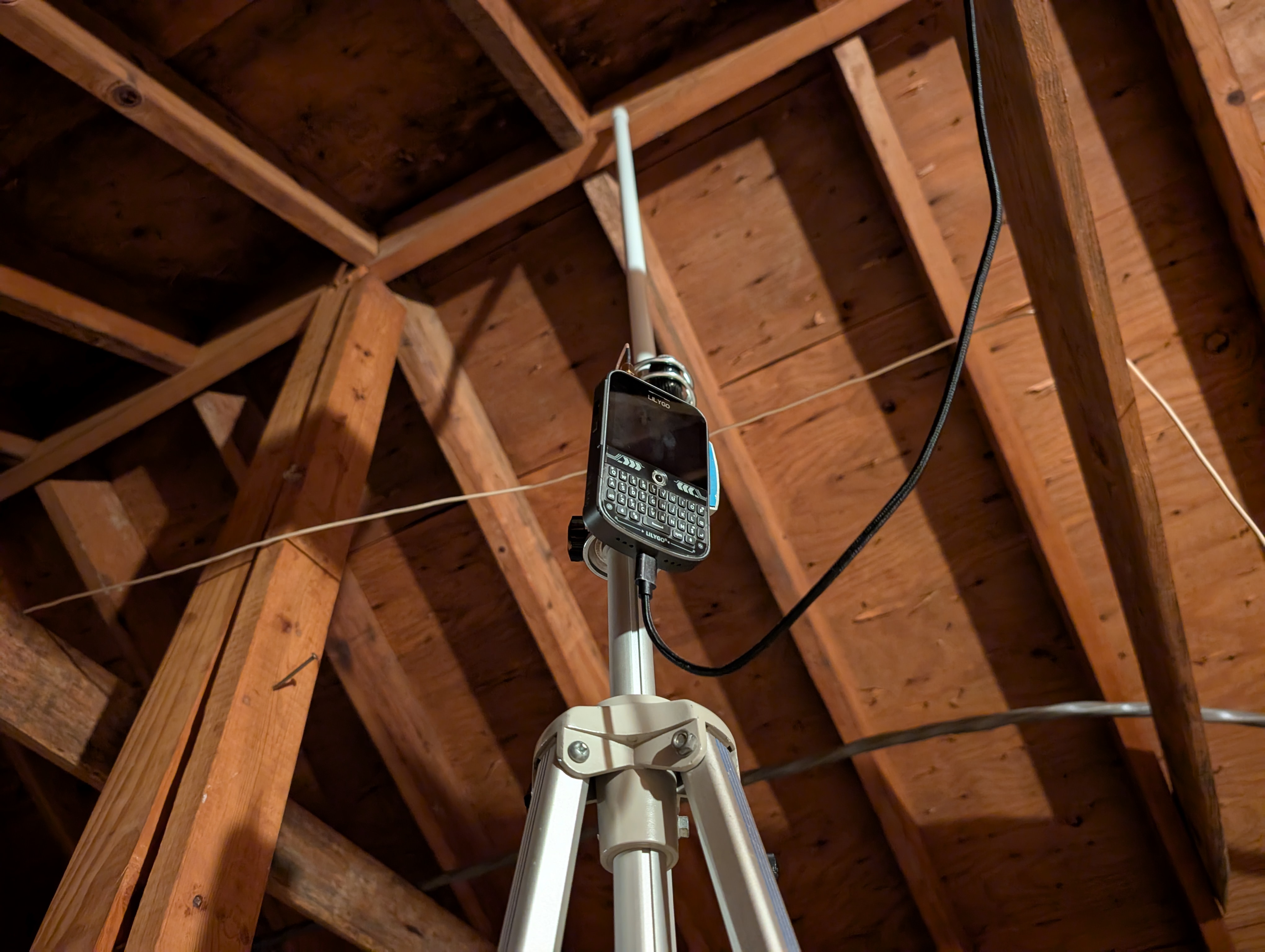
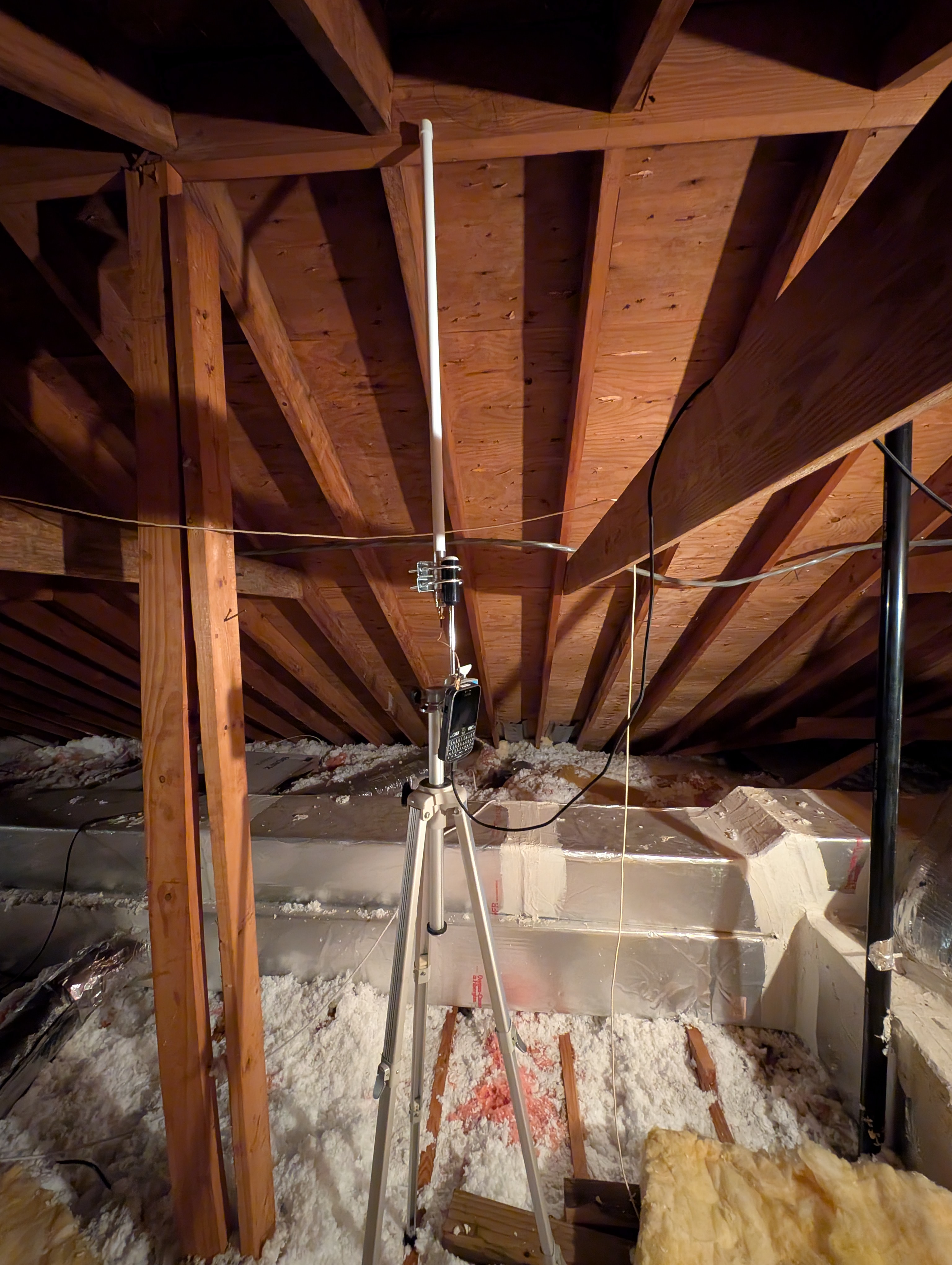
At the moment my T-Deck is serving as the stationary node at my house with a high-gain antenna connected to it in my attic. It's up there because my house is brick, so the environmental attenuation will be less up there. I do plan to eventually mount the antenna outside - I already have ADS-B and ACARS antennas so why not one more? lol
I think I'm picking up every node there is within 5km or so, and I sometimes get pings even further out. One thing I'm cognizant of is my transmit power - for the USA at 915MHz that's 30dBm. With the T-Deck and that antenna, I should be right at the limit. I need to be calibrated properly both to stay within legal signal levels (I don't care to talk to the FCC, ever) but also so I'm not drowning any nodes out in the mesh. One cool thing about Meshtastic is if you have a HAM Operators License, you can transmit with many times more power than without.
What's next?
Once the T3 S3 V1.3 arrives, I'll be messing with that. I'm familiar with the standalone Meshtastic via the T-Deck and the Android experience via the T-Deck and the Seeed T-1000E but I'd like to hook the T3 S3 up to a server and run it as a daemon so messages aren't missed when the viewing device is disconnected from the node.
Right now, I'm testing some band-pass filters I bought, as well as working on a mounting solution for the T-Deck that's magnetic for convenience in the car. It's nice that a lot of the ACARS and ADS-B gear is also useful here, especially the SMA stuff.